Sizing a Townsville solar system isn't about cramming on the most panels — it's about matching your real Ergon usage.
Start with your Ergon bill, not a panel count
The first question we get asked is almost always "how many panels do I need?" and our honest answer is that nobody can tell you until they've looked at your Ergon Energy bill. Your daily kilowatt-hour usage, printed right there on the bill, is the number that actually matters. A small North Ward unit running a couple of split systems looks nothing like a sprawling Kelso family home with a pool pump, three air-cons fighting the build-up, and a teenager who never turns a light off. Two homes in the same suburb can have wildly different needs, so a panel count plucked from a flyer is just a guess.
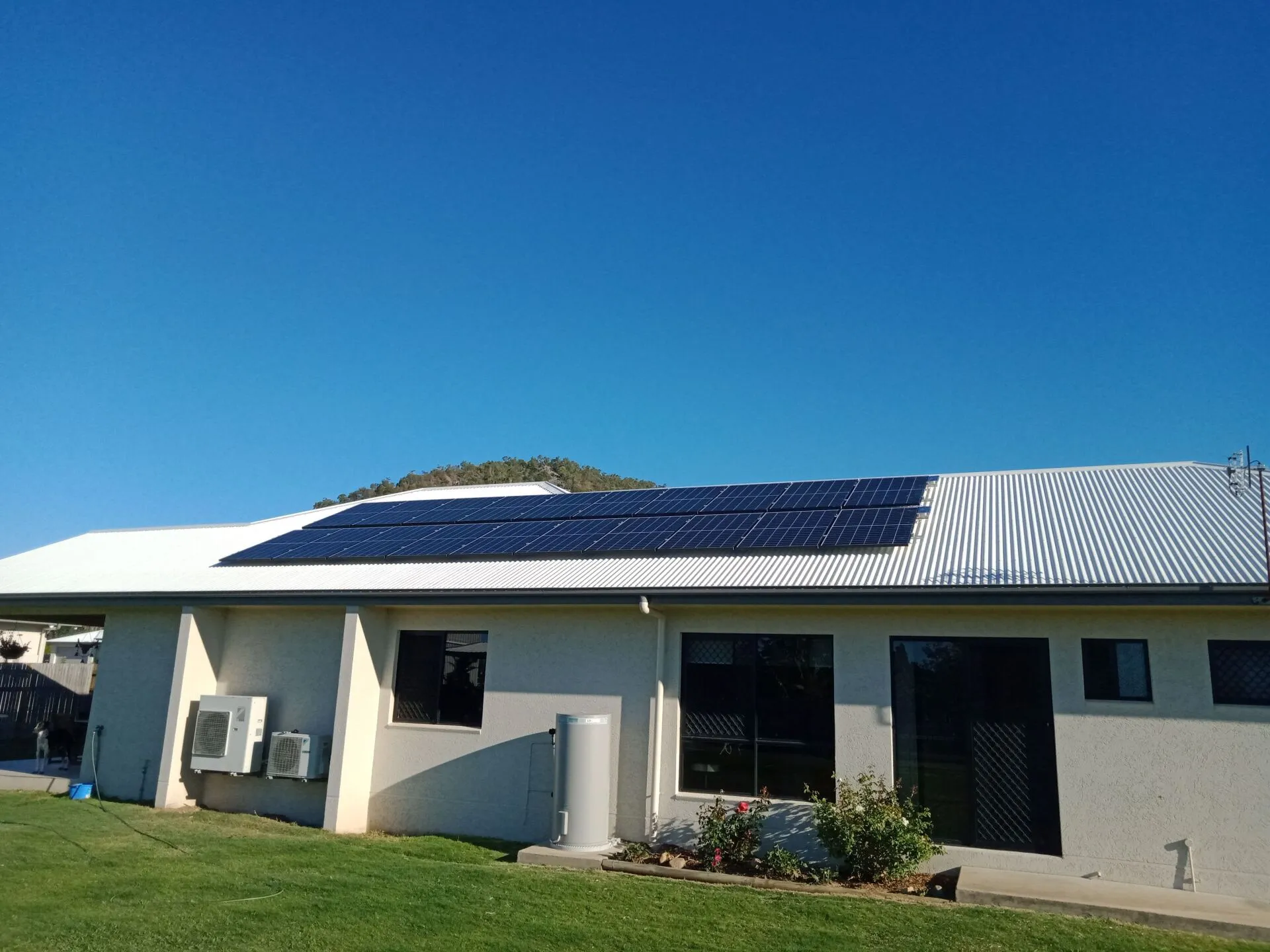
As a rough guide, plenty of Townsville households land somewhere around a 6.6kW system, while bigger families or all-electric homes push toward 10kW or more. But those are starting points, not gospel. We'd rather pull twelve months of your usage, look at how it spikes through the wet season when the air-con barely switches off, and size a solar power system that genuinely covers your patterns rather than selling you panels you'll never fully use.
Why bigger isn't always better up here
There's a temptation to think more panels always equals more savings, but it doesn't work that cleanly. Ergon's feed-in tariff, the bit you get paid for exporting surplus power, is modest, so flooding the grid with daytime energy you can't use yourself earns you very little. If you're out at work all day and the house is empty, an oversized array spends most of the day feeding the grid for a few cents a kilowatt-hour instead of slashing your own bill. The sweet spot is matching generation to what you actually consume.
Quality matters more than raw size, too. A tidy array of well-made panels paired with a solid Fronius inverter will out-earn a bargain mega-system over its life, especially in NQ heat where cheap gear cooks and fades fast. We fit panels like Jinko and JA Solar because they hold up to our humidity, our storms and our relentless sun, and that reliability is worth more than a couple of extra cheap modules on the roof.
Roof, orientation, and what you're planning next
Your roof has a big say in the final number. North-facing pitches are the gold standard here, but plenty of Townsville homes do well splitting panels east and west to spread generation across the day. Shading from a mango tree, a neighbour's two-storey, or a stubborn TV antenna can knock a panel's output around, so we walk the roof and plan the layout to dodge those losses rather than just filling every square metre. Suburbs like Kirwan and Bushland Beach often have the roof space to play with, while older inner-city homes need a more careful plan.
Then there's the future. If you're thinking about adding solar battery storage to ride through a storm-season blackout, or plugging in an EV charger down the track, it makes sense to size a little ahead so the system soaks up that extra demand instead of needing a costly upgrade later. The right number of panels isn't the biggest you can fit, it's the one that fits your bill, your roof and where you're heading. Have a chat with us and we'll work it out properly.
Ready to get it sorted?
We handle solar power systems across Townsville and the Burdekin — quoted upfront, installed by our own accredited local team.